
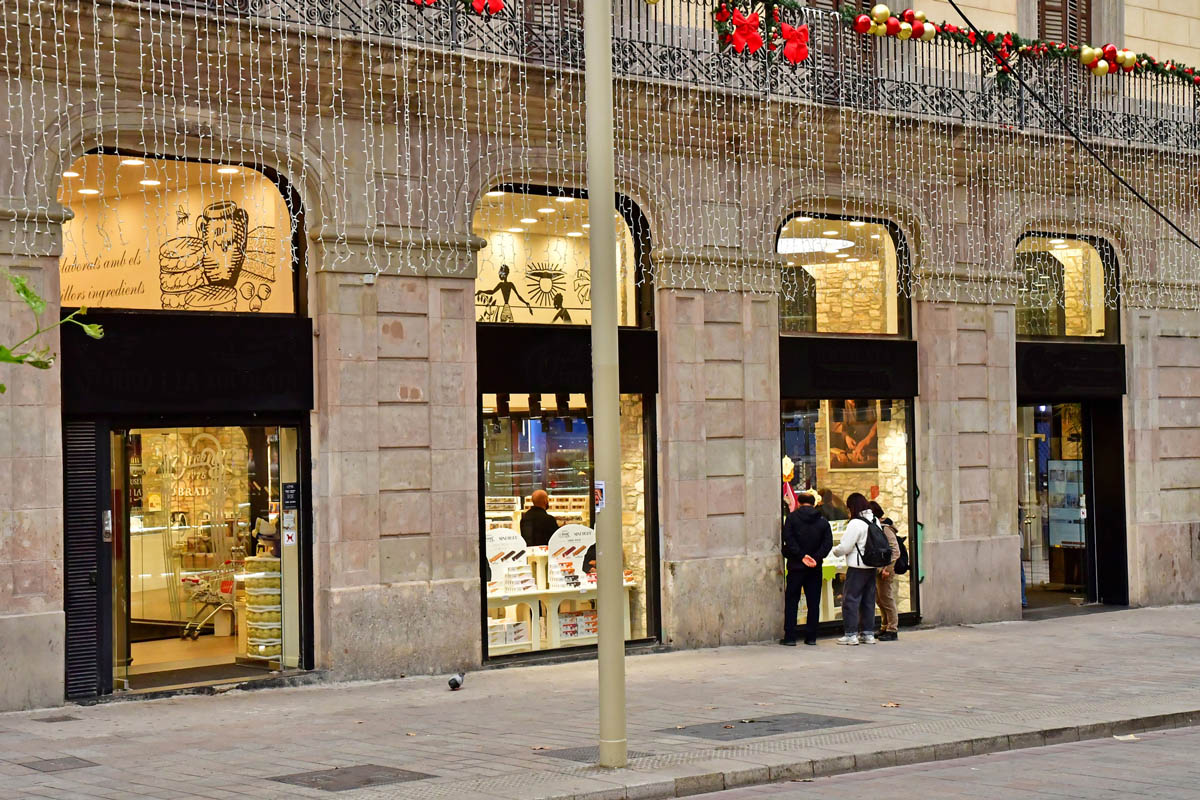
Selling a commercial premises in Barcelona with a tenant is not only possible: in many cases it is the most efficient option if your objective is to attract an investor buyer and close a transaction with solid arguments. The key is to understand that, when the premises are rented, the product you sell is not only “square meters”, but an asset with rents, with a level of risk and a projection of income.
At Arquitectura Residencial we have found that prime areas (due to commercial demand and stability) are the most sought after by investors because the risk of vacancy is minimal. We also see that the local investor is usually very professional: he demands data, difficult questions and impeccable documentation. That’s why, before going on the market, we check the documentation and prepare a comprehensive report so that the investor can decide quickly and safely.
Can you sell a premises with a tenant in Barcelona? What happens to the contract
When you sell a leased premises, the buyer usually assumes the position of landlord and the contract continues in force as agreed (except for particularities of the contract and the type of lease). In practical terms: the tenant remains in the premises and the new owner goes on to collect the rent and manage the contractual relationship.
This is precisely what makes the operation attractive to investors: the premises are already “in production”. However, in a sale with a tenant, the conversation focuses on risk (solvency and continuity), legal certainty (contract, guarantees, obligations) and compliance (licences/activity, situation of the property, payments, expenses). If something doesn’t add up, the buyer will ask for discounts, withholdings or suspensive conditions.
Important: each transaction has legal and fiscal nuances (for example, whether VAT or ITP/AJD is applicable, or if there is the possibility of waiving exemption in certain cases). To review applicable regulations and tax criteria, you can consult official sources such as the BOE (Urban Leases Law) and the FAQs of the AEAT on VAT on real estate transactions.
Selling with a tenant vs. selling empty: advantages, disadvantages and when it is convenient
Advantages of selling with a tenant
- Attraction of investors: the buyer buys rents from day 1.
- Less commercial uncertainty: there is already activity, use and “testing” of the market.
- Better financial narrative: price can be justified with profitability (cap rate).
- Especially powerful in prime areas: in our experience, demand is more consistent and vacancy is lower, which reduces “perceived risk”.
Common disadvantages or frictions
- More demanding buyer: they will ask for contract, guarantees, payment history, licenses and retail expenses.
- Less attractive for “end user”: if someone wants to exploit the premises for their business, the tenant is a barrier.
- Visits and management: you have to coordinate with the tenant and take care of the relationship.
When it is usually convenient to sell with a tenant
- When you have a solvent tenant with a good track record.
- When the contract has a reasonable remaining duration or stability.
- When the rent is aligned with the market (or you document why it is not).
When it may be convenient to consider an agreed exit or wait
- If the target buyer is “end user” (merchant who wants to occupy).
- If the contract has conditions that the market penalizes (for example, very low rent without revisions, conflicts, defaults or weak guarantees).
Preliminary checklist: documentation that an investor will ask you for (and how to prepare it)
In Residential Architecture we see that the difference between a smooth sale and a stalled sale is in theinformation collection and analysis. The professional investor does not buy with prospectus: he buys with data. That’s why we check documentation, detect risks, and prepare a comprehensive report that answers questions before they arise.
Operational checklist (before publishing the announcement)
- Completed and signed lease agreement (and attachments).
- Identification of the tenant (individual/legal entity) and basic solvency data (depending on availability and data protection).
- Payment history (minimum 12 months if possible) and delinquency situation: “zero” is a value argument.
- Guarantees: deposit, guarantee, additional deposit, personal guarantees.
- Current rent and updates (revision clauses, CPI or others).
- Expenses: IBI, community, insurance, supplies (who pays what) and spills if they exist.
- Licenses and activity: documentation available on the activity and its situation (when applicable).
- Urban situation and possible limitations (if there are changes of use, recent works, etc.).
- Visitation plan and coordination with the tenant (with a focus on minimal impact on their operations).
For municipal procedures linked to the transfer of the property (for example, municipal capital gains tax / IIVTNU when applicable), the City Council has online information and processing: Virtual Office of Procedures of the Barcelona City Council (capital gains tax).
How the price is set when the premises are rented: profitability, risk and “rental quality”
In a sale of premises with a tenant, the price is usually anchored to a financial logic: net rent and risk. In a simplified way, the buyer looks at a target profitability (cap rate) and adjusts according to:
- Solvency and stability of the tenant: trajectory, sector, business continuity.
- Remaining duration of the contract and conditions (extensions, revisions, obligations).
- Income with respect to the market: if it is below, the investor discounts; if it is above but sustainable, it can reward.
- Location: In our experience, prime zones reduce the fear of vacancy and sustain value.
- Licences and activity fit: anything that reduces uncertainty accelerates decision-making.
This explains why the “professional” investor asks for so much information: he tries to quantify the risk. At Arquitectura Residencial, when we prepare the report, we don’t just list documents: we organize the data so that the buyer quickly understands the history of the asset (rents, stability, expenses, location of the premises) and can validate their model.
Sales strategy in Barcelona: how to attract the right buyer (without wasting time)
1) Define the target buyer: investor or end user
If you sell with a tenant, the natural buyer is the investor. Your listing and your dossier must speak their language: profitability, stability, contract and guarantees. If your ideal buyer is an “end user” (someone who wants to open their business), then the tenant limits the fit and it is advisable to propose alternatives (agreed exit, sale with delivery date, etc.).
2) “Data” marketing: clear and verifiable dossier
At Arquitectura Residencial we have learned that the investor responds when he perceives that the operation is “under control”. That’s why we check documentation, ask for what’s missing and present a comprehensive report: it reduces rounds of questions, avoids late renegotiations and improves the quality of offers.
3) Managing visits with tenants: taking care of the relationship
- Agree on schedules and rules (photos, accessible areas, confidentiality).
- Avoid “real estate tourism”: filter buyers before visiting.
- Explain the process clearly to the tenant; Reduces friction and protects activity.
Typical case: Owner-trader who sells to obtain liquidity and maintain the business
Among our clients there are also merchants who, for various reasons, decide to sell the premises where they carry out their activity. It is a particularly interesting solution when looking to obtain liquidity without losing the point of sale: the owner sells the property and continues to operate the business as a tenant (in practice, an operation similar to a sale & leaseback).
In these cases, the sale can be very attractive for investors because it combines: (1) a tenant “of the house” who knows the premises and is interested in continuing, (2) operational continuity and (3) a rental structure that can be agreed with market logic. Here the fine work is in the contract and in demonstrating solvency and stability of the business. Again, the professional investor will ask for data: this is why at Residential Architecture we usually recommend preparing the dossier with the same discipline as a financing: clear numbers, orderly documentation and coherent contractual conditions.
Table of casuistry: what to do according to the type of tenant and contract
riskvaluesarearentimprovementoptionconditions
| Casuistry | Perceived | What the investor | Recommended strategy |
|---|---|---|---|
| Solvent tenant + good track record + prime | Low | Stability, continuity, high occupancy | Sale 100% oriented to investors with complete financial dossier |
| Below-market | Medium | Potential for future | Justify with contract/updates and realistic review scenario |
| Short contract (expires soon) | Medium | Re-market | Sell with flexibility; go-to-market plan if left empty |
| Tenant with incidents (delays, conflicts) | High | Risk Discount | Regularize, document and assess scenarios (including agreed exit) |
| Merchant owner who sells and stays as a tenant | Variable | Solvency of the business and contract | Structure solid contract, market income and activity/sales dossier |
Conclusion: selling a premises with a tenant in Barcelona is selling “rent”, and preparation is everything
If your premises are in an area with demand (especially in prime areas) and the tenant is solvent, you can turn the operation into a very attractive asset for investors. But the professional investor does not buy intuitions: he buys verified documentation, a coherent history of the asset and a well-explained risk.
At Arquitectura Residencial we work like this: we review contract and situation, verify key documentation (including licenses/activity when applicable) and prepare a comprehensive report for investors. In addition, if you are a merchant and you want to sell to obtain liquidity while maintaining your business, we also structure the strategy so that the buyer understands the continuity and reserve of the income.
Do you want a valuation and a specific sales plan for your premises? Get in touch with Arquitectura Residencial and we will prepare a sales dossier aimed at the type of buyer who pays the most for your asset: the one who understands the risk… and view the data.
Are you considering selling your commercial premises
Consult with our experts for the best sales strategy
Request your appraisalFrequently Asked Questions
Discover more from Your trusted real estate agency in Barcelona
Subscribe to get the latest posts sent to your email.


Join The Discussion