

What documentation is required to sell a property in Barcelona?
The essential documentation required to execute a deed of sale before a notary includes the title deed, which proves who the legal owner of the property is, a valid certificate of occupancy, an up-to-date energy performance certificate, and the latest property tax (IBI) receipts. The seller must provide the community of owners’ bylaws and submit a certificate confirming that community fees are up to date to the buyer on the day of signing. The seller must also state whether the property has undergone the Building Technical Inspection, which depends on the year of construction.
If you are going to sell a property in Barcelona, success begins with gathering all the essential documentation. Collecting it in advance avoids delays, renegotiations and unexpected issues at the notary’s office. Here is the complete list, explained without technical jargon, including who issues each document, how long it takes and what to look out for to ensure everything runs smoothly.
Essential checklist for the sale
These are the documents that a buyer, the notary and the Land Registry will request. Some are legally required. Others help to complete the transaction under better conditions.
| Document | What is it for? | Who issues it? | Validity / Estimated timeframe |
|---|---|---|---|
| Title deed (proof of ownership) | Confirms ownership. | Notary / Land Registry | Indefinite |
| Land Registry extract (nota simple) | Shows charges, mortgages and ownership. | Land Registry | 48–72 hours |
| Certificate of occupancy | Confirms the property is fit for habitation. | Government of Catalonia | 15 years / Issue: 30 days |
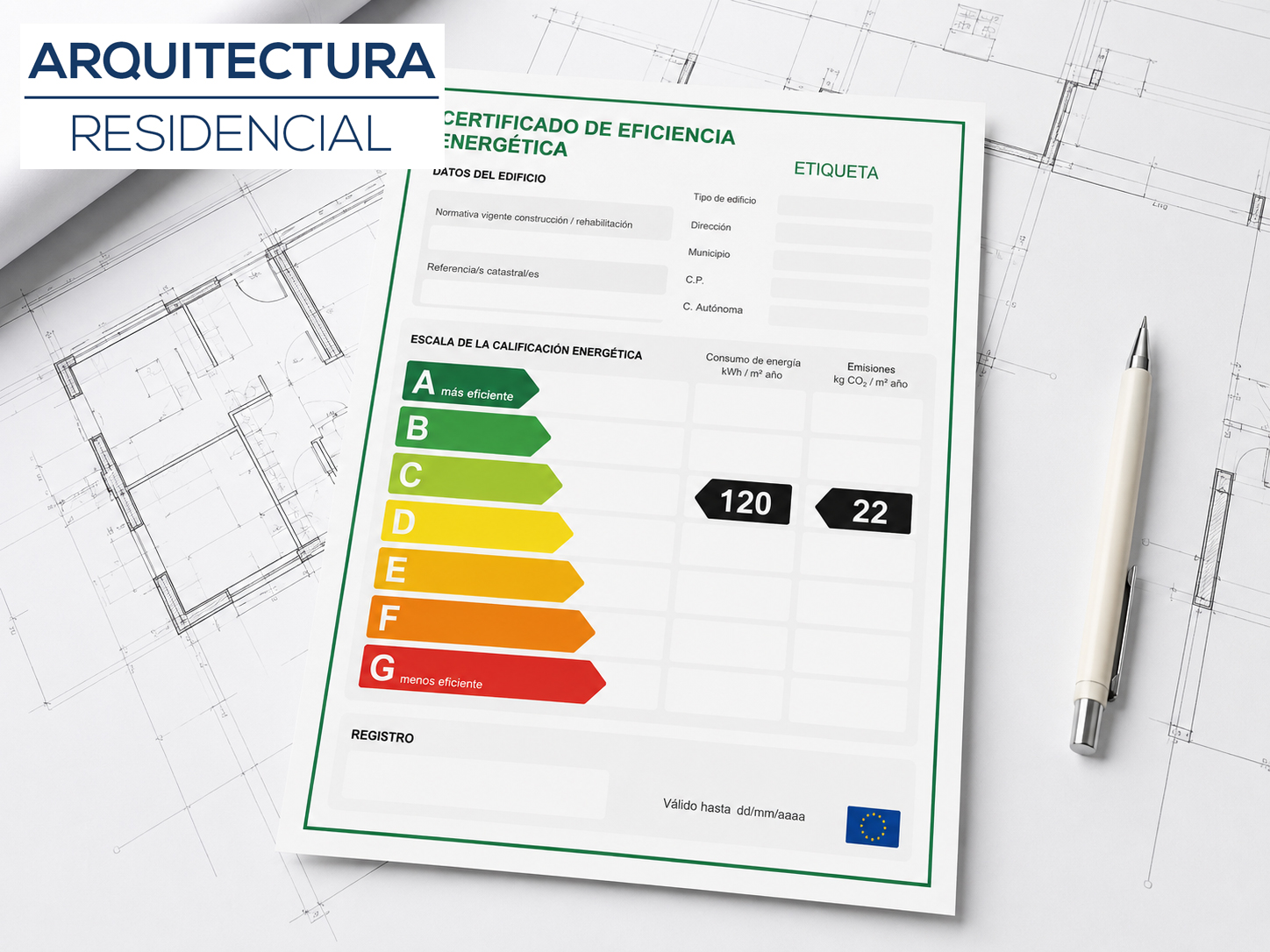
| Energy Performance Certificate (EPC) | Energy rating and recommended improvements. | Qualified technician + regional registry | 10 years / Issue: 2–7 days |
| Building Technical Inspection (ITE) | Condition of the building if over 45 years old. | Qualified technician + authorities | According to resolution / 2–8 weeks |
| Property tax (IBI – latest receipt) | Proof of tax payment. | Local council | Annual |
| Community bylaws and service charge statement | Internal rules and outstanding debts or special levies. | Property manager | Up-to-date certificate required at signing |
| Planning classification | Restrictions and possible planning implications. | Local council / planning department | According to enquiry |
Explained step by step
1) Title deed: the starting point
The title deed identifies the owners and the origin of ownership: purchase, inheritance, gift or allocation. Check that those listed are the ones who will sign. If there are several owners, ensure that all agree. Bear in mind that the title deed does not reveal charges. For that, you need the Land Registry extract.
A common misconception, especially among private sellers, is to assume that being heirs automatically makes them owners. Heirs become the legal owners once they have accepted the inheritance and registered it with the corresponding Land Registry. Be aware that when there is more than one property in different locations, it is possible to forget to register the inheritance in all the relevant registries.
The process of accepting an inheritance and settling taxes can sometimes take up to six months. It is not advisable to sign any sale contract without first verifying ownership of the property.
2) Land Registry extract (nota simple)
Request it before publishing the listing. Knowing whether there is a mortgage, attachment or easement avoids surprises at the reservation stage. If there is a mortgage, you can still sell. It will simply be cancelled before the notary with the proceeds of the sale. It also allows you to confirm the registry number (CRU) and the surface area actually recorded at the Land Registry. Property registry information in Spain can be obtained online via the REGISTRADORES DE ESPAÑA website.
Registry information can also be requested in person at the registries in each locality. Interestingly, requesting the extract in person is cheaper than doing so online. In Barcelona, the various Land Registries were relocated to a single building at Passeig de la Zona Franca 109.
3) Valid certificate of occupancy
In Catalonia, this certificate is mandatory in order to sell or let a property. To advertise the property or carry out any procedure, this document must be valid. The certificate of occupancy is arranged by a technician who verifies surface areas, ventilation and facilities. The technician checks all the characteristics of the property and whether it complies with current regulations: minimum rooms and surface area, ceiling height, ventilation, health and safety, among other aspects.
We still encounter properties built before 1973 that have never had a certificate. These are homes that have always remained within the same family and have not been transferred. For properties built before 1984, the applicable regulations may vary. For this reason, it is advisable to hire a technician experienced in this type of procedure.
The authorities issue the certificate after a few weeks. If you would like further details, we provide a comprehensive guide: Certificate of occupancy in Barcelona: requirements and timeframes.
A valid certificate is mandatory in order to advertise a property.
4) Energy Performance Certificate
The law requires it in order to advertise and complete the sale. The technician prepares the certificate and registers it with ICAEN. The certificate rates both energy consumption and emissions on a scale from A to G. The validity of the certificate varies. It is valid for 10 years unless it has a G rating, in which case the duration is shorter.
It is a mandatory certificate in order to advertise residential property and must be provided to the notary to be incorporated into the deed of sale. Recently, valuation companies have even requested all the certificate information: data collected prior to the application, improvements proposed by the certifier and the energy label. If you carry out minor improvements (LED lighting, draught proofing), you can improve the rating.
5) ITE: buildings 45 years old or more
The inspection assesses any defects the building may have. It is a mandatory visual inspection for buildings above a certain age: it checks for potential defects in the structure, façades, roofs and communal installations. It also reviews safety, health conditions and accessibility. Once the inspection has been carried out, if there are serious defects, deadlines will be set for carrying out works and remedying them. Once the condition of the building has been verified, the technician will request the building’s certificate of suitability from the Agència Catalana d’Habitatge. It is important to review the entire report and understand the true state of repair of a building, especially when selling a property. Buyers will require maximum information, and providing these documents brings clarity to the transaction.
6) Community: bylaws and certificate of no outstanding debts
The property manager will issue a certificate confirming that there are no outstanding debts. It must also state whether special levies have been approved that will affect the new owner. Provide the bylaws and, if applicable, internal regulations. This will avoid misunderstandings regarding use, noise or pets.
7) Property tax and utilities
Bring the latest property tax (IBI) receipt. At completion, it is usually apportioned on a daily basis. Keep the latest utility bills as well. They are not mandatory, but they help to resolve practical questions from the buyer.
8) Planning classification and municipal charges
A simple planning enquiry will inform you whether there are any restrictions, public easements or limitations. This is key for ground-floor properties, penthouses and homes in protected buildings. If you plan works before selling, confirm feasibility.

Tips to avoid delays
- Plan ahead: request the certificate of occupancy and the EPC as soon as you decide to sell.
- Organise the documentation into one digital file and another in paper format.
- Transparency: if there is a charge, disclose it and explain how it will be cancelled.
- Photographs and floor plans: include them. They increase trust and perceived value.
Tax matters: keep the information at hand
Keep the invoices for notary fees, Land Registry fees and purchase taxes. Also retain supporting documents for improvements. They will help you calculate the capital gain. If you would like to explore this further, you may be interested in: What taxes will I pay after selling a property?
Are you selling with an agency or on your own?
A specialised agency provides structure, marketing reach and buyer screening. It also coordinates the obtaining of certificates and resolves legal details. If you decide to sell on your own, use this guide as a checklist and be strict with deadlines. In both cases, documentation sets the pace of the sale.
Do you need assistance?
At Arquitectura Residencial we prepare the documentation, plan the commercial strategy and take care of the presentation: photography, video and virtual tour. We accompany you from valuation to completion at the notary’s office.
Schedule a call with one of our property experts
We will inform you of everything you need to achieve an effective sale at the best price
Request your appointmentFrequently asked questions
Yes. The mortgage is cancelled with part of the price at completion. The notary coordinates the discharge letter and registration.
Between 2 and 4 weeks from the technician’s visit. During administrative peak periods it may take longer.
Yes. Regulations require the EPC to be in place and the energy label to be shown in advertising.
It depends on the agreement, but typically those approved before the sale are borne by the seller. Put it in writing.
Discover more from Your trusted real estate agency in Barcelona
Subscribe to get the latest posts sent to your email.



Join The Discussion